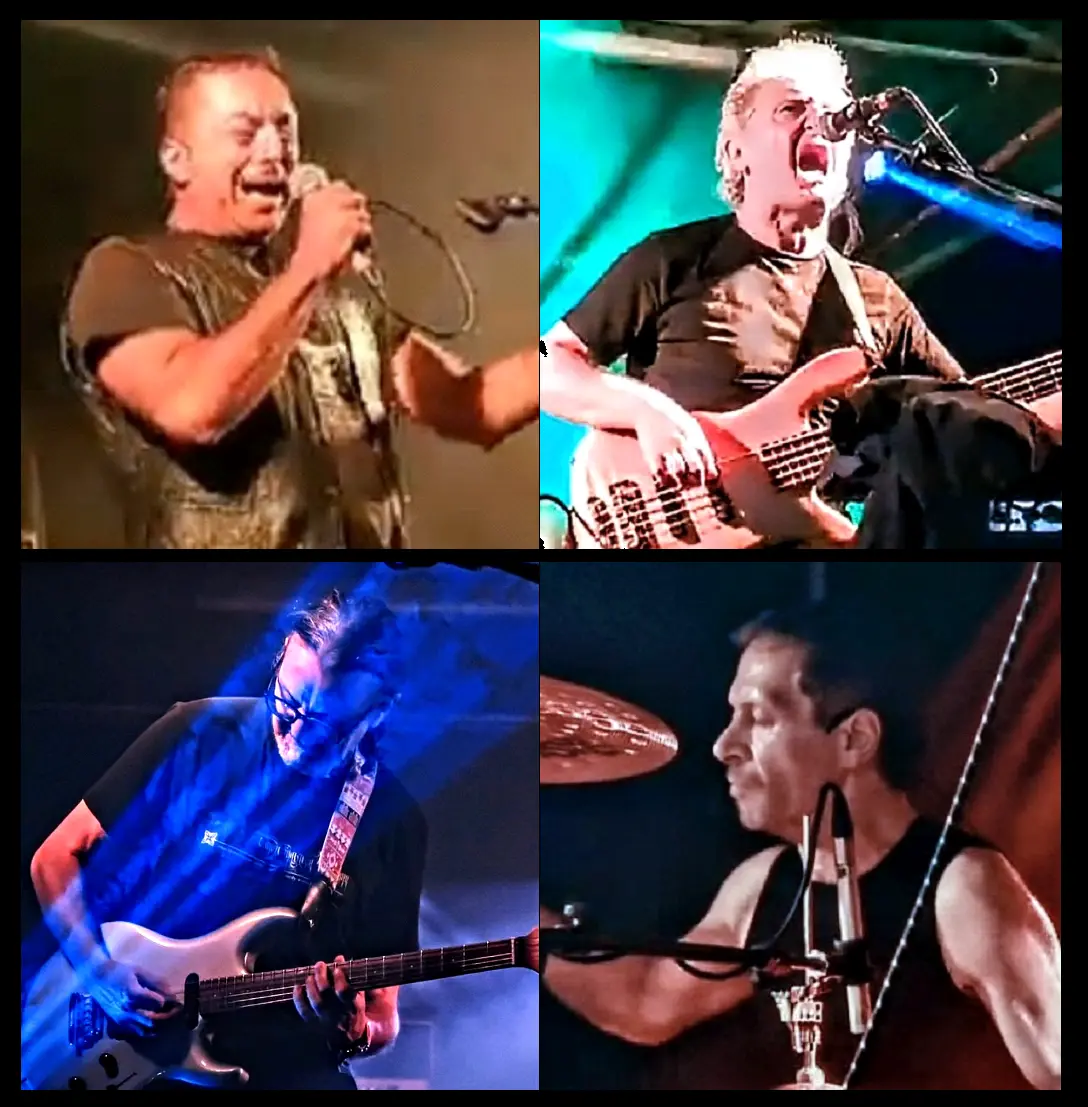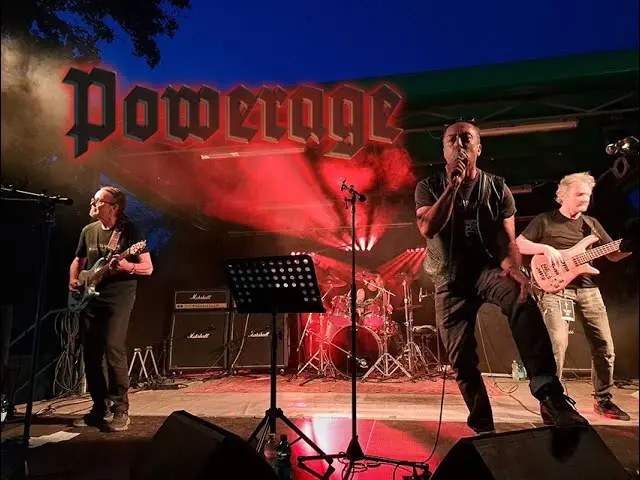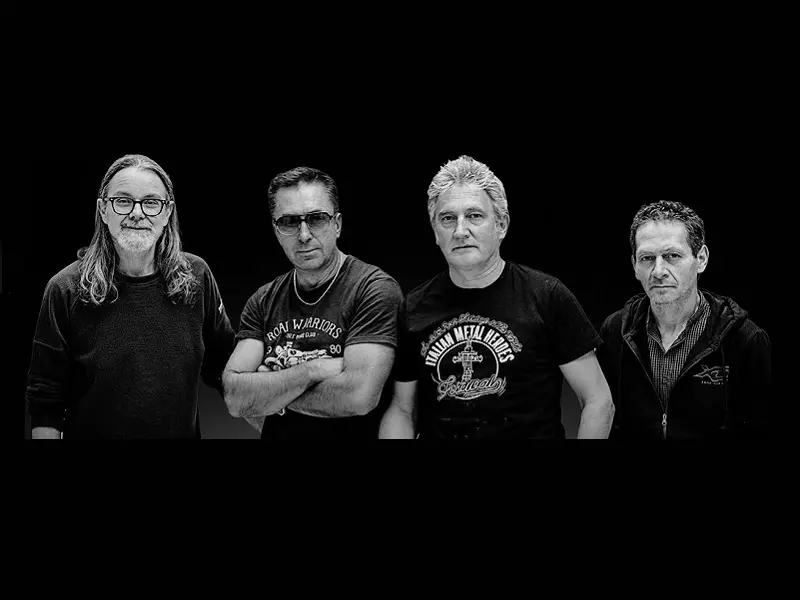
Biography – Powerage The band Powerage was formed in L’Aquila in the early 1980s on the initiative of an original core consisting of Gianni Ferrari (guitar), Silvio Japadre (bass), and Fabio Japadre (vocals and drums). After their first live performances, during which the band presented a repertoire of covers from historic hard rock groups, the trio immediately embarked on an independent songwriting path. Their initial inspiration was rooted in the classic rock of legendary acts such as Led Zeppelin and Jimi Hendrix, before gradually evolving toward heavier metal sounds, in line with the trends that would strongly shape the rock scene of that era. The original material, increasingly well received by audiences and industry insiders, was collected in the band’s first demo, Doomed to Power, featuring four tracks. Shortly thereafter came a second production, recorded in one of the main studios in the capital, Rome: the demo Hot Stuff, consisting of six tracks, which helped consolidate the attention of music professionals toward the group. During this period, Powerage were contacted by a Dutch record label for the production of an album which, however, was never released due to contractual disagreements. In the same timeframe, the track “Roadrunner,” taken from the demo, was included in a U.S. compilation dedicated to emerging rock artists. Toward the end of the 1980s, the band continued its songwriting activity, presenting new material in numerous live performances across Abruzzo and Lazio. In the early 1990s, the arrival of Berardo Gasbarri as lead vocalist allowed Fabio Japadre to focus exclusively on drums and marked the beginning of a new artistic phase. While maintaining solid heavy roots, the group gradually shifted its style toward a more open form of rock, embracing a wider range of influences and contaminations. This evolution led to the creation of new songs which, together with reworked earlier material, were included in the demo tape Powerage 98–99, containing four tracks. Recorded in two phases between Rome and L’Aquila, the work stood out for its sound quality and compositional originality. With this new repertoire, the band took part in several festivals and competitions, receiving positive feedback, and continued an increasingly selective live activity, favoring venues capable of best enhancing the sound of their music. During this period, the idea of compiling their entire repertoire into a CD took shape. The challenge Powerage set for themselves was to transform a musical legacy primarily tied to live performance into a self-produced record capable of competing—both in sound quality and in the care of arrangements—with the best international productions. With this goal, the band began intensive studio work in L’Aquila, devoting meticulous attention to recording and arranging their material, without time constraints and guided by a single principle: the quality of the final result. This long creative journey concluded on March 31, 2004, with the release of a new self-produced CD, Clepshydra, a title taken from a track already featured in a previous demo. The album includes twelve songs through which Powerage sought to synthesize the influences and experiences developed over more than twenty years of musical activity. Characterized by a remarkable variety of arrangement solutions, the record also features collaborations with external musicians, with original elements ranging from cello—used in the ballads—to keyboards, present in the intros and in the opening track. The album is conceived with a precise narrative thread: the first track returns at the end in a completely reworked unplugged version, while each song is linked to the next by intros that anticipate its atmosphere, giving the album a unified and coherent structure. In 2009, the earthquake that devastated the city led to a significant suspension of the band’s activities, mainly due to the impossibility of using their historic rehearsal space, which was declared unsafe. However, this tragic event never weakened the group’s determination or the members’ desire to continue playing together. In the following years, activities gradually resumed at full pace, also thanks to the availability of a new recording studio established in the city, which allowed the band to work consistently again with renewed enthusiasm. In 2024, they took part in the second live edition of “Italian Metal Heroes” in Tarcento, thanks to the involvement of Gianluca Sinicco, organizer and curator of the festival.
Playlist
Offizielles Video
Live-Video
Galerie